








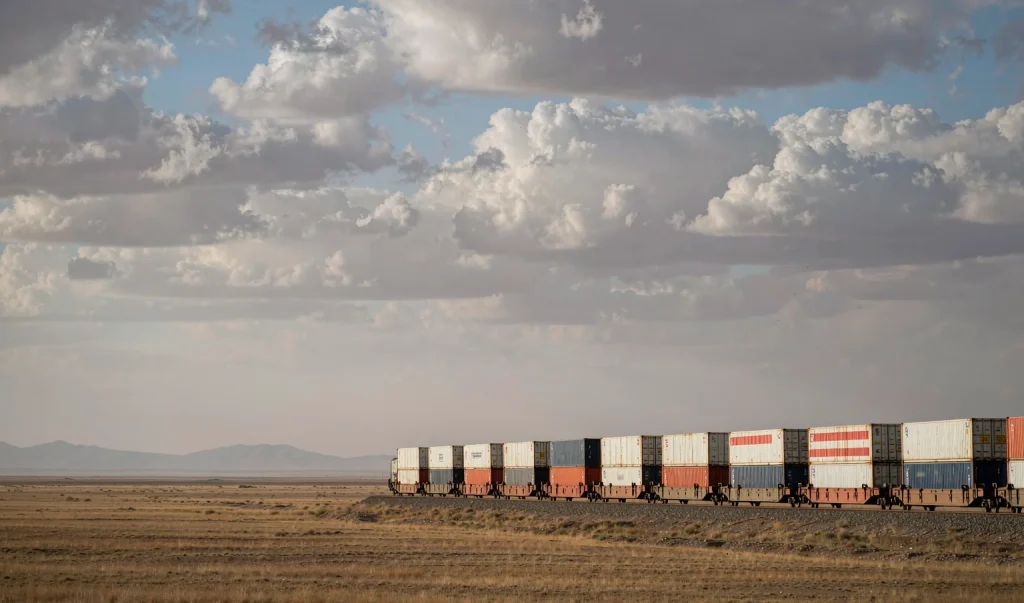
A new overland freight corridor between China and Iran just became operational. On 7 September 2026, the first dedicated block train from China to Iran via Central Asia departed Altynkol in Kazakhstan carrying 55 containers of automotive components and consumer goods. If it keeps its promised schedule, it gives shippers a rail option that avoids the Strait of Hormuz entirely – and adds a genuine alternative to TIR trucking and sea routings on one of the most sanction- and risk-sensitive lanes in Eurasian logistics.
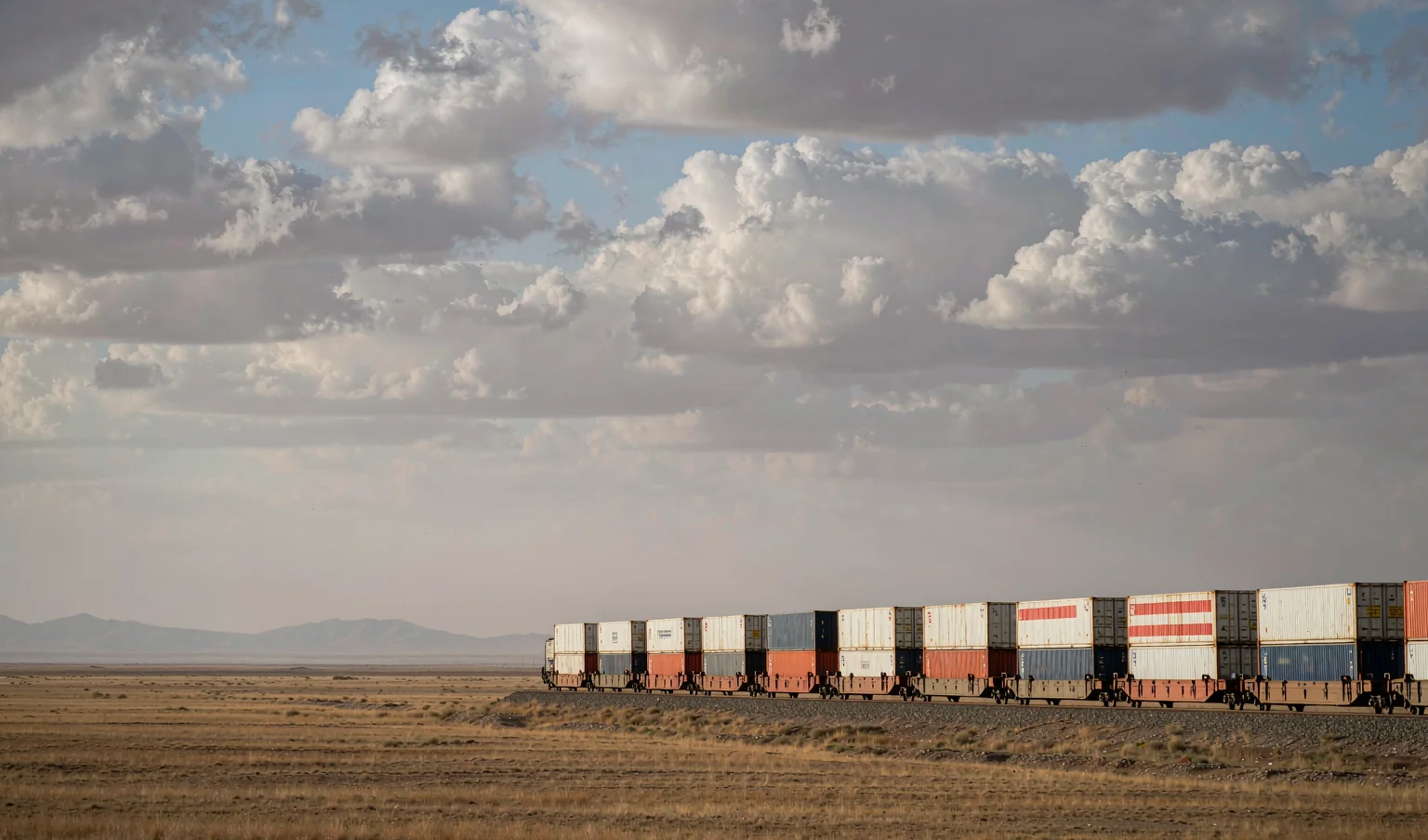
What Happened: The First Block Train
According to Uzbekistan Railways’ container operator Uztemirjulcontainer – as reported by Asia Plus on 11 September 2026, citing Interfax Kazakhstan – the inaugural train crossed from China through the Khorgos-Altynkol border crossing, then departed Altynkol station on 7 September. The train travels more than 6,000 kilometres through Kazakhstan, Uzbekistan and Turkmenistan before entering Iran at the Sarakhs railway crossing, with delivery expected in roughly 14 to 16 days.
- Cargo: 55 containers of automotive components, consumer goods and consolidated freight.
- Border crossings: Khorgos-Altynkol (China-Kazakhstan), Saryagash-Keles (Kazakhstan-Uzbekistan), Khojadavlet-Farap (Uzbekistan-Turkmenistan) and Sarakhs (Turkmenistan-Iran).
- Operator’s goal: Uztemirjulcontainer treats the run as a practical test of the China-Central Asia-Iran corridor. If transit times hold, regular block trains could follow.
China-Iran rail traffic through Central Asia is not new – cargo has moved this way before, including routings that bypassed Uzbekistan. What is new is a dedicated block train organised through Uzbek territory, with an operator actively marketing schedule reliability.
Why This Corridor Matters Now
The Middle East situation has kept Gulf shipping under pressure, with war-risk premiums and vessel availability pushing ocean costs on Iran-bound cargo sharply higher. A rail routing avoids the Strait of Hormuz and the Gulf maritime approach altogether, which is exactly the exposure shippers have been trying to hedge.
Rail also sits in a useful middle position between sea and air. Sea remains the cheapest option when maritime routes operate normally, and air is fast but expensive at scale. A 14-16 day rail product slots neatly between the two for time-sensitive but not urgent cargo – machinery parts, electronics, consumer goods restocking.
The bigger story is diversification itself. As the logistics analysis site Logisticswall noted in September 2026, the value of the corridor is not that rail replaces sea – a block train carries a fraction of a container ship’s volume – but that shippers gain a second fully overland option when maritime risk pricing spikes.
Uzbekistan’s Transit Incentive
Uzbekistan wants the traffic. From February through the end of 2026, a 0.60 reduction coefficient applies to tariffs for certain international shipments on the Keles-Khojadavlet section – the exact segment trains use when travelling from Kazakhstan through Uzbekistan toward Turkmenistan, according to the Russian customs and logistics portal tks.ru. That discount directly lowers the cost of the Central Asian transit leg and signals that the three transit countries are aligning on pricing, not just infrastructure.
The Catch: Gauge Changes and Border Bottlenecks
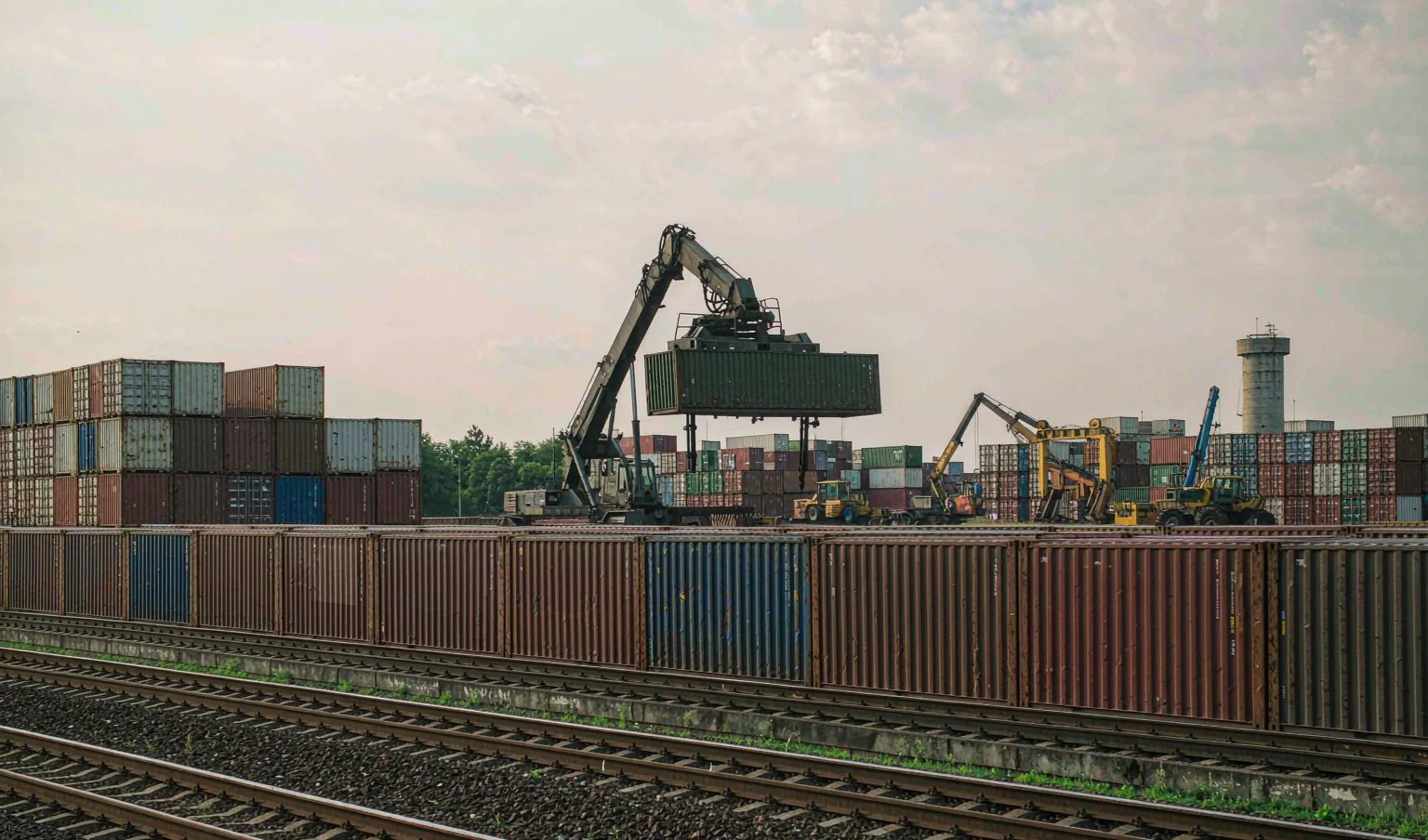
Overland does not mean friction-free. China, Kazakhstan, Uzbekistan and Turkmenistan all run 1,520 mm broad-gauge railways, while Iran uses 1,435 mm standard gauge. Cargo therefore faces gauge-change or transshipment operations – at the China-Central Asia interface and again at Sarakhs. Those border operations can become the new bottleneck if volumes grow faster than terminal capacity.
Security and insurance need attention too. The routing removes maritime attack and Hormuz exposure, but the cargo still enters Iran, where conflict-related disruption remains possible. Shippers should arrange door-to-door cover with explicit war-risk and sanctions language rather than assuming a standard all-risk policy applies.
Rail vs TIR Trucking vs Sea: How to Choose
| Option | Typical China-Iran transit | Strengths | Watch-outs |
|---|---|---|---|
| New rail block train via Central Asia | About 14-16 days | Avoids Hormuz; priced between sea and air; scheduled service | Gauge changes at borders; service still being proven |
| TIR trucking door to door | About 12-18 days | True door to door; flexible dates; proven on this lane since 2024 | Driver and border capacity limits per truck |
| Sea via Gulf ports plus land leg | Roughly 4-6 weeks | Lowest cost per container for volume cargo | Hormuz exposure; war-risk premiums; longer inventory cycle |
For most shippers the practical answer is a portfolio: TIR trucking for urgent and high-value cargo, the new rail product as a mid-tier option once regular service is confirmed, and sea-plus-land for heavy volume when the maritime premium is acceptable.
What Shippers Should Watch Next
- Whether the schedule holds. The corridor’s credibility rests on the 14-16 day promise. If regular trains keep it, forwarders will build products around it.
- Border terminal capacity. Sarakhs and the gauge-change points are where congestion would appear first if volumes jump.
- Insurance terms. War-risk and sanctions coverage for overland Iran routings should be confirmed in writing before booking.
How CargoSolid Can Help
CargoSolid has operated TIR trucking from China to Iran and across Central Asia since 2024, alongside rail and sea-plus-land routings. We monitor every new corridor as it opens and quote the routing that actually fits your cargo – not the one that is fashionable this month. For a comparison of rail, trucking and sea options on your next China-Iran shipment, contact cargosolid@outlook.com or WhatsApp +86 186 7539 5280.
Related Materials
- Why TIR Trucking Is the Most Stable China-Iran Option
- Iran Shipping Customs Document Checklist 2026
- Shipping from China to Uzbekistan — Country Page
- Land Transport | Sea Freight | Customs Clearance
- FAQ | Contact Us
Get in Touch
Tell us what you are shipping and where it is headed. Our team usually replies within one business day with a tailored quote.