








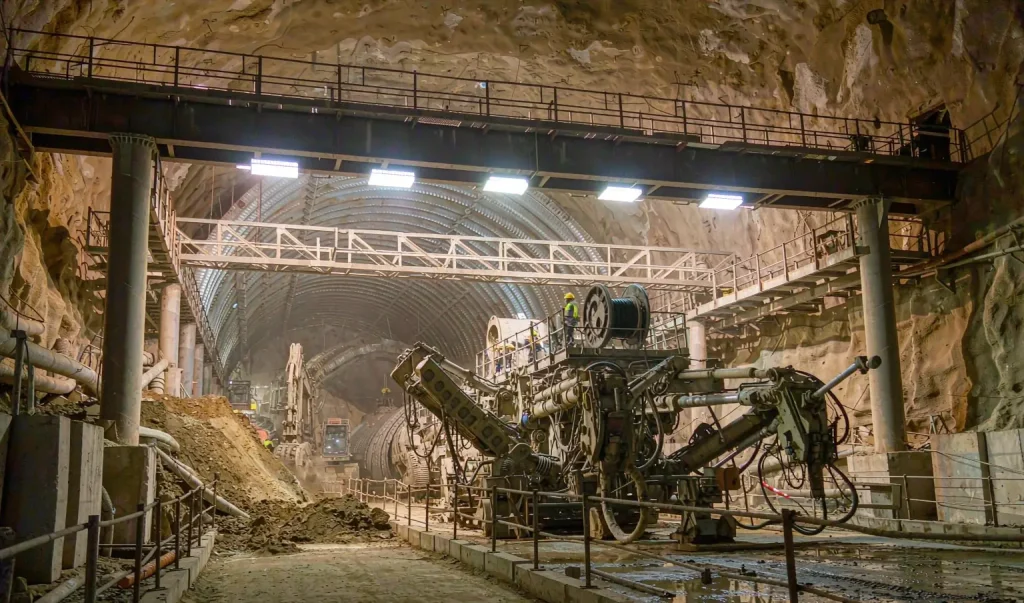
The China-Kyrgyzstan-Uzbekistan railway – talked about for 27 years before a single metre was built – has just passed its first real construction milestone: a completed tunnel. In September 2026 the project company confirmed the first bored tunnel on the Kyrgyz section, while Beijing and Tashkent used a 17 October summit in Tashkent to recommit to the line. It is the most concrete signal yet that a rail route from Kashgar into the Fergana Valley, bypassing Kazakhstan and Russia entirely, is actually happening. For shippers moving cargo to Uzbekistan and the wider region, though, the useful question is different: what does this change today, and what only changes around 2030?
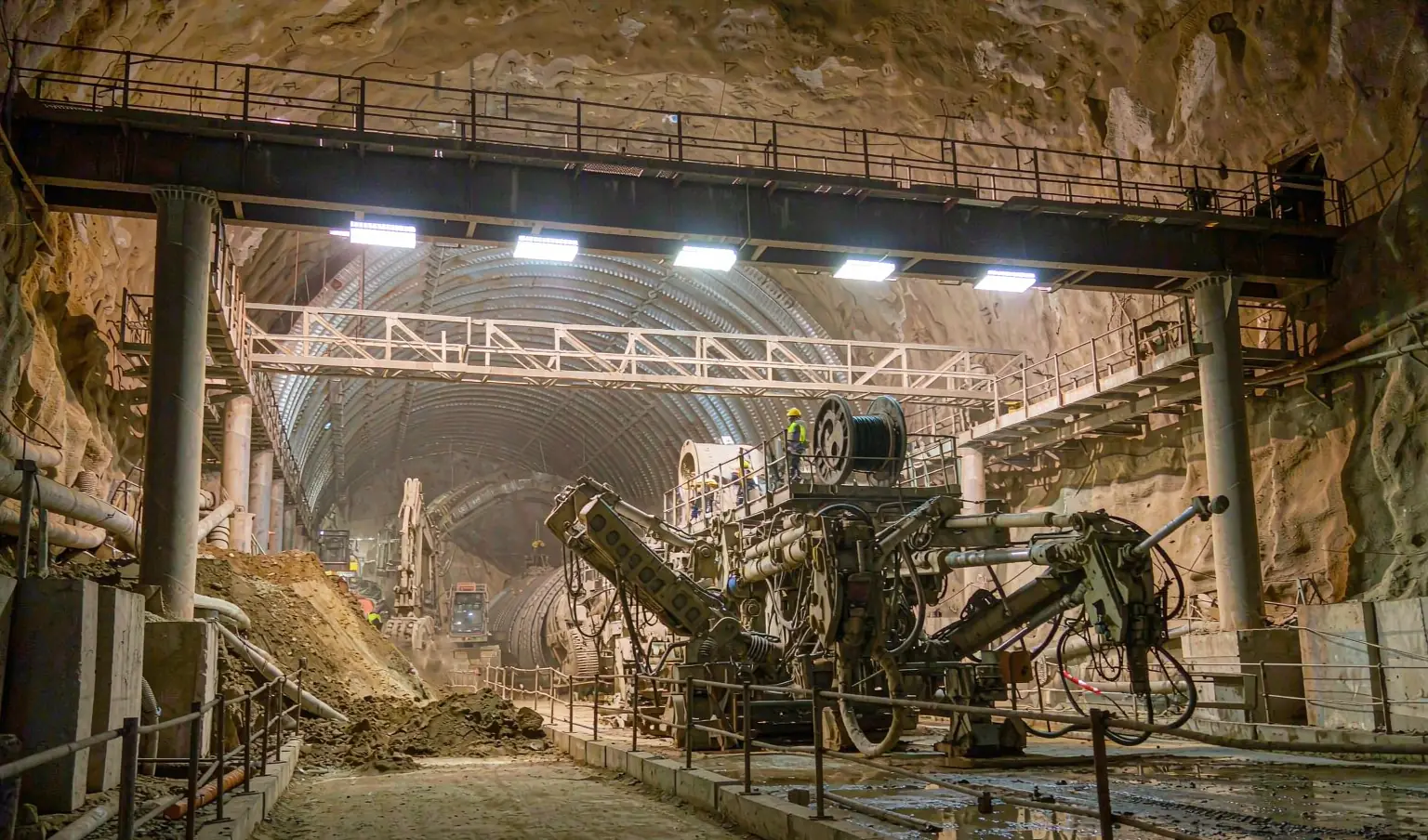
The Milestone: First Tunnel Complete, Construction at Full Spread
The first breakthrough came at the Koshtobo North No. 2 tunnel – a modest 209.6 metres of bore, but the first completed tunnel on the Kyrgyz section and a proof of construction tempo. Behind it, the project is now one of the largest infrastructure sites in Central Asia. As of August 2026 the Kyrgyz section stood at roughly 17 percent overall progress, with:
- 27 of 29 planned tunnels under excavation, including work on the major Naryn and Jalal-Abad tunnels;
- 43 bridges under construction;
- 88 roadbed sections started;
- foundation work under way at all 20 planned stations.
At the political level, Chinese Premier Li Qiang told Uzbek President Shavkat Mirziyoyev in Tashkent on 17 October that China stands ready to ensure high-quality implementation of the railway, part of a visit that signed cooperation documents across trade, customs and e-commerce. Bilateral trade context is moving fast too: China-Uzbekistan trade reached US$16.1 billion in 2025, and China accounted for about 23 percent of Uzbekistan’s foreign trade in the first eight months of 2026.
The Route: Kashgar, Torugart, Makmal, Andijan
The line runs roughly 530 kilometres from Kashgar in Xinjiang, over the Torugart pass into Kyrgyzstan, through the Jalal-Abad region to Andijan in Uzbekistan’s Fergana Valley. Its engineering signature is the gauge split:
- Torugart to Makmal, about 165.5 km, in Chinese standard gauge (1,435 mm). Chinese trains run straight through this section.
- Makmal to Jalal-Abad, about 146.3 km, in the 1,520 mm broad gauge used by Kyrgyz and Uzbek networks, connecting onward to Andijan and the existing system.
- Makmal is the transshipment station where containers transfer between trains, wagons can have their wheel assemblies changed, and freight trains are assembled or split.
The design allows up to 15 million tonnes of freight per year – a capacity figure, not a forecast. Kyrgyzstan has also announced free economic and industrial zones at the Torugart, Jerge-Tal, Makmal and Jalal-Abad stations, signalling an ambition to build warehousing, processing and consolidation around the line rather than just move transit boxes.
Money, Ownership and Timeline
The project is costed at about US$4.7 billion. A project company owns it 51 percent Chinese, 24.5 percent each Kyrgyz and Uzbek. A syndicate of Chinese banks is providing roughly US$2.3 billion as a 35-year loan under an agreement signed on 16 December 2025, with a similar amount forming the company’s charter capital. The railway was formally launched in December 2024 and full civil works began in mid-2025.
On timing: Uzbekistan’s transport ministry has pointed to completion by the end of 2030, and the project’s chief engineer has spoken of reaching operating condition by June 2031. The claimed prize for through traffic is a route about 900 kilometres shorter than the current northern routing via Kazakhstan and Russia, saving seven to eight days for China-to-Central-Asia-and-beyond flows. Treat both the date and the saving as direction, not promise – mountain railways have a habit of discovering geology late.
What It Changes for Cargo – and What It Does Not Yet
Here is the honest part that press releases skip: for cargo moving in 2026 and 2027, this railway changes almost nothing operationally. Today’s options to Uzbekistan remain what they were last quarter:
- Rail via Kazakhstan – the mature route through Alashankou/Dostyk or Khorgos, which set records this year but also showed the queues that gauge-change yards produce. Our October border-queues report has the current picture.
- TIR trucking through the passes – full truckloads running Kashgar to Osh via Irkeshtam or over Torugart, then onward by road or broad-gauge rail. This existing multimodal combination is precisely how China-Uzbekistan freight reaches the Fergana Valley today, and the eTIR digital transition keeps stripping paper out of it. See our note on eTIR across the region.
What the railway genuinely changes is the medium term. A direct China-Uzbekistan rail link that bypasses the northern corridor gives Uzbekistan – and through Andijan, the whole Fergana Valley – a second, sovereign routing option, adds competition to Kazakhstan’s transit position, and should shorten transit for Fergana Valley destinations specifically, which today ride the longest detours. It also follows the corridor’s wider build-out: the Middle Corridor through the Caspian and the Baku-Tbilisi line are absorbing record investment at the same time.
What Shippers Should Do Now
- Plan 2026-27 cargo on the routes that exist. Rail via Kazakhstan and TIR trucking via Kyrgyzstan are competitive and improving; do not hold shipments waiting for a 2030 railway.
- Use trucking where it wins. For Fergana Valley destinations, TIR trucking via Torugart or Irkeshtam is often the fastest door-to-door option and avoids border gauge-change entirely.
- Book rail two to three weeks ahead. Border-yard queues at Dostyk and Altynkol bunch after holidays; early booking and pre-arrival documents are what the new fast-clearance systems reward.
- Decide DDP or DAP before booking. Who registers the import and pays Uzbek duties changes both paperwork and effective cost. We handle both, including acting as importer of record for buyers without a local entity.
- Watch the corridor announcements, then verify against weekly data. Government transit-time claims on Central Asian corridors have been improving fast, but the Caspian and border yards still produce queue weeks. Confirm the current snapshot before fixing delivery deadlines.
How CargoSolid Helps
CargoSolid runs rail and TIR trucking programs from China to Uzbekistan, Kyrgyzstan, Kazakhstan and the wider region, with land and rail freight services and door-to-door DDP options covering customs, duties and final delivery under one fixed price. If you are weighing rail against truck on a Central Asia lane, send us the cargo details and deadline and we will quote both side by side. Contact cargosolid@outlook.com or WhatsApp +86 186 7539 5280.
Frequently Asked Questions
What is the China-Kyrgyzstan-Uzbekistan railway?
A roughly 530 km rail line from Kashgar in China through Kyrgyzstan to Andijan in Uzbekistan, costed at about US$4.7 billion and owned 51 percent by Chinese, 24.5 percent each by Kyrgyz and Uzbek shareholders. It will be the first direct China-Uzbekistan rail route bypassing Kazakhstan and Russia.
When will the CKU railway open?
Construction is targeted for completion around the end of 2030, with the project’s chief engineer citing operating condition by mid-2031. The first tunnel on the Kyrgyz section was completed in September 2026 and construction is under way along the full route.
Why does the railway change gauge at Makmal?
The line runs in Chinese standard gauge (1,435 mm) from Torugart to Makmal, about 165 km, then switches to the 1,520 mm broad gauge used in Kyrgyzstan and Uzbekistan. Makmal is being built as the transshipment station where containers are transferred and trains are assembled.
Is there a faster way to ship to Uzbekistan today?
Yes. Rail via Kazakhstan is the workhorse route, and TIR trucking through Kyrgyzstan via the Torugart or Irkeshtam passes is usually the fastest door-to-door option for the Fergana Valley. Both are available today; the new railway does not change 2026-27 planning.
How much faster will the CKU railway be?
Officials cite a route about 900 km shorter than the northern corridor, saving seven to eight days for through traffic, with design capacity of up to 15 million tonnes a year. These are project figures – real-world gains will depend on border processing and terminal capacity.
Is DDP shipping available to Uzbekistan and Kyrgyzstan?
Yes. CargoSolid can act as importer of record through its regional partners, covering export clearance in China, the main carriage, destination customs, duties and taxes, and final delivery for one fixed price. Contact us for a quotation.
Related Materials
- China to Uzbekistan Shipping 2026: Rail Boom & DDP Guide
- China-Europe Rail October 2026: Border Queues and Faster Corridors
- eTIR Goes Paperless Across the Caspian
- Shipping from China to Uzbekistan | Kazakhstan | Iran
- Land & Rail Freight | DDP Shipping from China | FAQ | Contact Us
Get in Touch
Tell us what you are shipping and where it is headed. Our team usually replies within one business day with a tailored quote.