








October 2026 is showing both faces of China-Europe rail at the same time. On 12 October, Alashankou – China’s busiest rail border crossing – passed 7,000 China-Europe and China-Central Asia trains for the year, 45 days earlier than the same milestone in 2025. Three days earlier, an industry monitoring snapshot of border crossings described more than 4,100 containers waiting for transshipment at Dostyk, 10-12 day truck queues at Khorgos, and container loading cycles running beyond 30 days at the Caspian port of Aktau. Record throughput and record queues are arriving together – and both change how you should plan cargo to Kazakhstan, Uzbekistan, Russia, the Caucasus and Iran.
What the Border Data Recorded in Early October
Monitoring by the International Freight Railway Express think tank as of 9 October 2026, reported by industry outlets, painted a lane-by-lane picture:
- Dostyk (Kazakh side of Alashankou): more than 4,100 containers awaiting transshipment.
- Altynkol (Kazakh side of Khorgos): average transshipment time of 7-10 days with roughly 3,400 containers waiting – about 800 fewer than the week before, but wagon and platform capacity still short.
- Alashankou road crossing: severe congestion with exit queues of about 3-4 days.
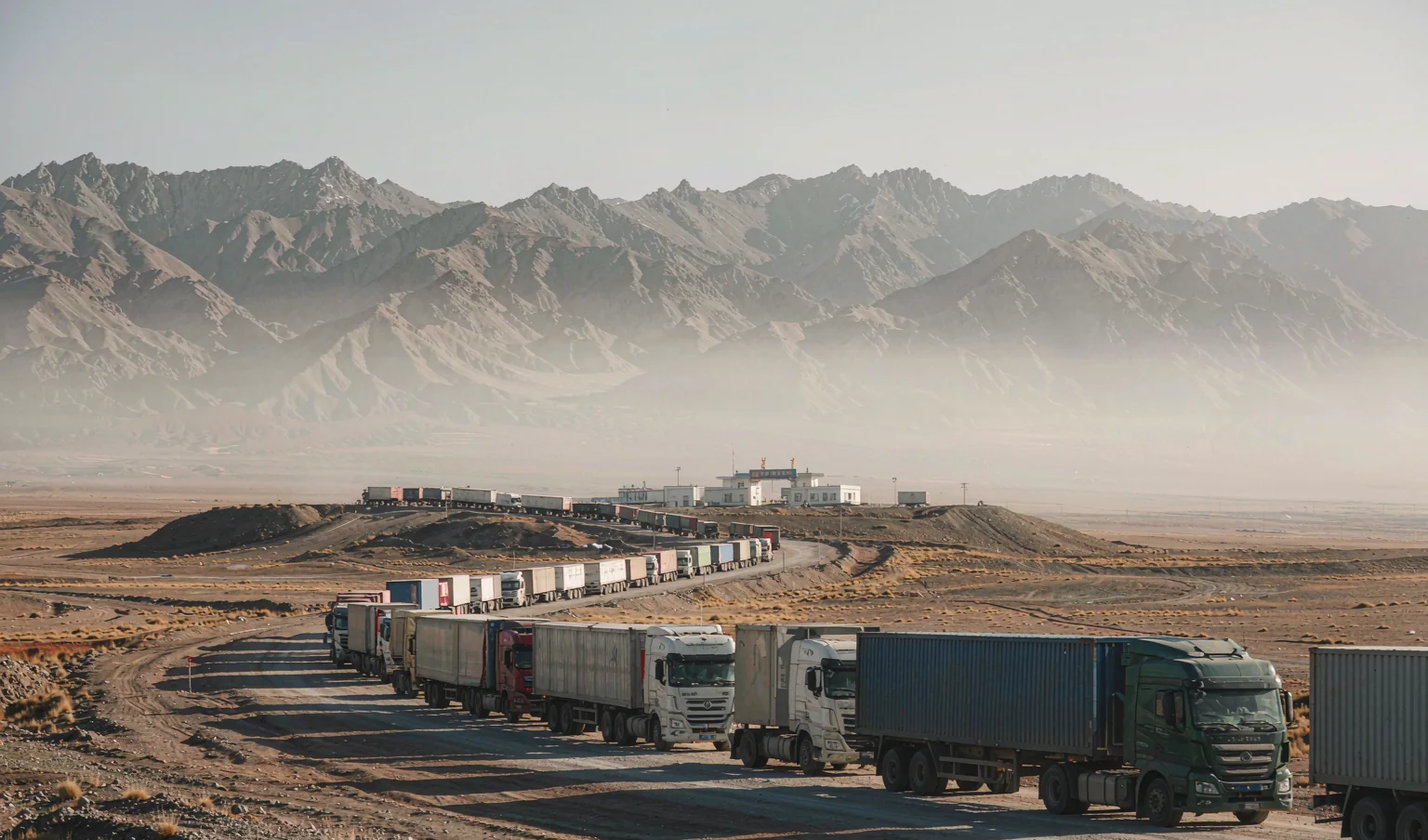
- Khorgos road crossing: severe congestion with exit queues of 10-12 days.
- Zabaykalsk (Russia border): roughly 2,585 containers waiting for gauge change.
- Russia destination terminals: several Moscow-area yards including Elektrougli, Selyatino, Lyubertsy 2 and Kresty receiving slower, while Bely Rast, Vorsino and others ran smoothly; inbound waits averaged 5-7 days at Kolyadichi and 10-14 days at Buzhino.
- Aktau (Caspian): loading cycles holding above 30 days under weather and port-efficiency limits.
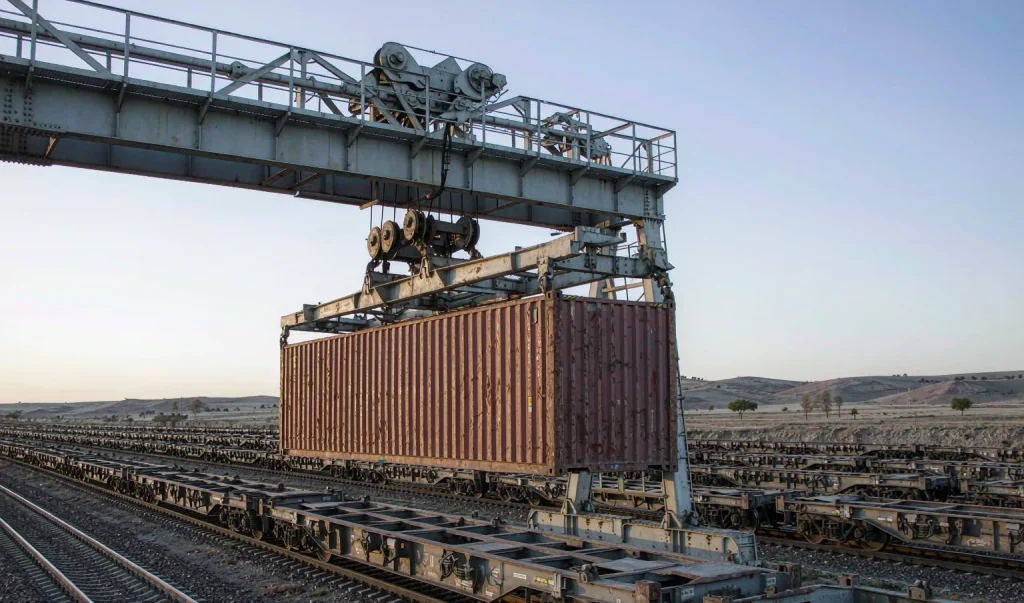
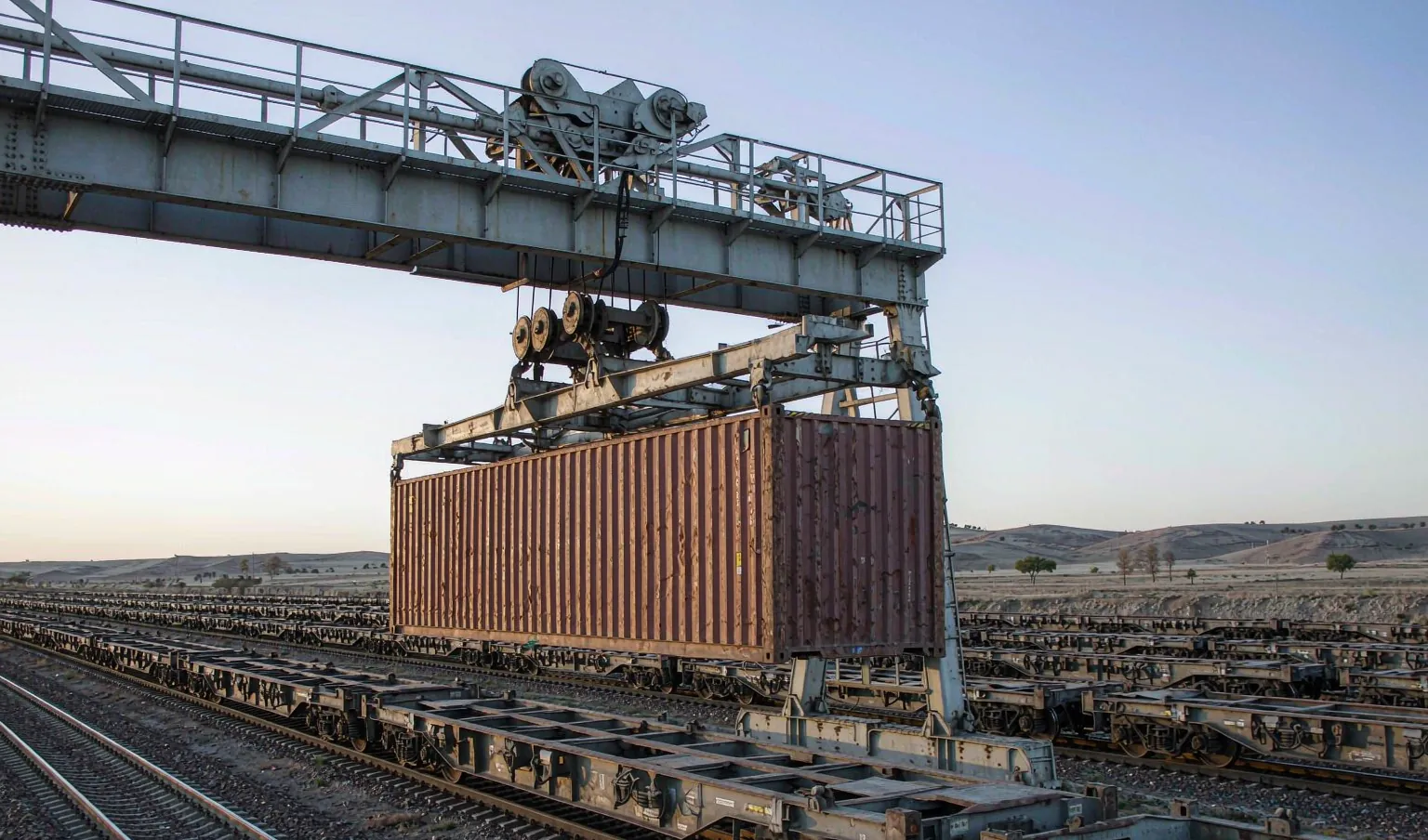
The pattern is structural, not accidental. Every container crossing the 1,435 mm to 1,520 mm gauge change has to be lifted, wagon by wagon – and when demand bunches after Golden Week, the lifting capacity is what runs out first.
Alashankou’s 7,000th Train and the Clearance Upgrade
The milestone matters less than what sits behind it. According to a Guangming Daily report of 13 October from the crossing, Alashankou now handles about 25 trains a day on average with a single-day record of 36, on 130 routes reaching 21 countries and more than 200 categories of goods. The “smart railway port plus local fast clearance” reform has moved customs work ahead of the train: manifests transmit electronically before arrival, customs and railway data sync in real time, and transfer declarations plus secondary filing steps have been cancelled. Reported results:
- Clearance time compressed from two to three days to as fast as 16 hours.
- Operating costs for a freight company using the crossing down about 30 percent.
- Overall import clearance duration cut by more than 70 percent.
- Parallel inspection at the comprehensive inspection yard lifting single-train check efficiency by 70 percent, with non-intrusive scanning cutting boarding inspections to as little as 10 minutes.
- A new Jinghe-Alashankou second track raising standard-gauge receiving capacity by 15 percent and broad-gauge capacity by 30 percent.
Read together, the message is that the Chinese side of the border is no longer the constraint. The queue you experience as a shipper is decided across the frontier.
The Middle Corridor Is Getting Faster – Partly in Fact
The Kazakh government announced on 5 October 2026 that transit along the Trans-Caspian corridor has fallen from 38 days to 13-17 days, helped by the Digital Trade Corridor platform that integrates the railways of Kazakhstan, Azerbaijan and Georgia, and by the Tez Customs module, which processes transit customs procedures without paper – cutting clearance from eight hours to 30 minutes by official figures. Dredging has started at Aktau to lift corridor capacity by up to 30 percent, a response to the Caspian’s falling water level. Rhenus, meanwhile, advanced plans reported on 3 October for a trimodal container terminal at Aktau with at least 150,000 TEU of annual capacity – still at the preparation stage with no construction timeline. Kazakhstan Temir Zholy says the corridor moved about 44,000 TEU in the first eight months of 2026, up 58 percent year on year.
Treat the headline numbers as direction, not promise. These are government and operator figures, the Caspian ferry leg remains the reliability wildcard, and the same October monitoring that praised the corridor also recorded 30-day loading cycles at Aktau. Capacity is being built – but this quarter’s schedule still needs buffer days.
Why the Queues Persist Anyway
- Physics. Gauge change means every container is transshipped by crane. No paperwork reform removes the crane queue.
- Bunched demand. The pre-Golden Week rush plus the post-holiday release lands on the same wagon pool in October.
- Weather. Caspian storms and the shrinking sea complicate Aktau and Kuryk operations through autumn and winter.
- Destination-side dwell. Moscow-area terminal reception is uneven, so transit variability does not end at the border.
The practical consequence: quoted rail transits currently carry wide error bars. Plan with ranges, and build about a week of buffer into any deadline commitment.
What Shippers Should Do Now
- Book two to three weeks ahead and add buffer days. Corridor space is allocated in advance; late bookings inherit whatever queue is left.
- Split the exit. Do not put every container through one crossing – mix Alashankou and Khorgos rail exits, and keep a truck option priced.
- Use TIR trucking for time-critical cargo. Road queues are measured in days rather than weeks, and trucks deliver door to door with no gauge change. See our note on eTIR across the Caspian.
- Finish documents before the wheels move. Accurate HS codes, clean invoices and pre-arrival eTIR data are what the smart-clearance reforms actually reward.
- Fix DDP or DAP early. Decide who clears at destination and who pays duty and VAT before booking, not after the container crosses the frontier.
- Track weekly border data, not headlines. Queue lengths move week to week; a two-week-old news story is not a routing plan.
How CargoSolid Helps
CargoSolid runs rail and TIR trucking programs from China to Kazakhstan, Uzbekistan, Kyrgyzstan, Turkmenistan, Russia, the Caucasus and Iran, with door-to-door DDP options that put customs, duties and final delivery under one fixed price. If October’s border data has you re-planning, send the cargo details and deadline – we will quote rail, truck and mixed routings side by side. Contact cargosolid@outlook.com or WhatsApp +86 186 7539 5280.
Frequently Asked Questions
How congested are the Central Asia border crossings in October 2026?
As of the 9 October monitoring: more than 4,100 containers waiting at Dostyk, 7-10 day transshipment at Altynkol, 3-4 day truck queues at Alashankou and 10-12 days at Khorgos. Conditions shift weekly, so ask for the current snapshot before booking.
Is Alashankou faster than it was?
On the Chinese side, yes: clearance has been compressed to as fast as 16 hours and the new second track adds 15-30 percent capacity. But queues at Dostyk on the Kazakh side remain the binding constraint.
Is the Middle Corridor actually faster now?
The Kazakh government reports transit down from 38 to 13-17 days with digital customs processing. The Caspian ferry leg still varies, and October monitoring recorded loading cycles above 30 days at Aktau – so build in buffer days.
Should I switch from rail to truck?
For time-critical cargo, yes: TIR trucking avoids gauge-change queues and delivers door to door. For cost-sensitive volume, rail stays cheaper. Many shippers run both in parallel.
How do I avoid border delays on China-Europe rail?
Book early, split your exit crossings, transmit documents pre-arrival, keep HS codes accurate, and keep a priced trucking fallback in case the rail queue spikes.
What does DDP include on Central Asia lanes?
Export clearance in China, the main carriage, destination customs clearance, duties and taxes, and final delivery under one fixed price, with the exact scope confirmed per country before booking.
Related Materials
- Shipping from China to Georgia: Poti, Batumi and DDP Delivery
- Shipping from China to Kazakhstan | Uzbekistan | Russia | Iran
- Erenhot Passes 26,000 China-Europe Trains | eTIR Goes Paperless Across the Caspian
- Middle Corridor Update: BTK at Full Capacity
- War-Risk Cover & Surcharges: Q4 2026 Playbook
- Land & Rail Freight | DDP Shipping from China | FAQ | Contact Us
Get in Touch
Tell us what you are shipping and where it is headed. Our team usually replies within one business day with a tailored quote.