








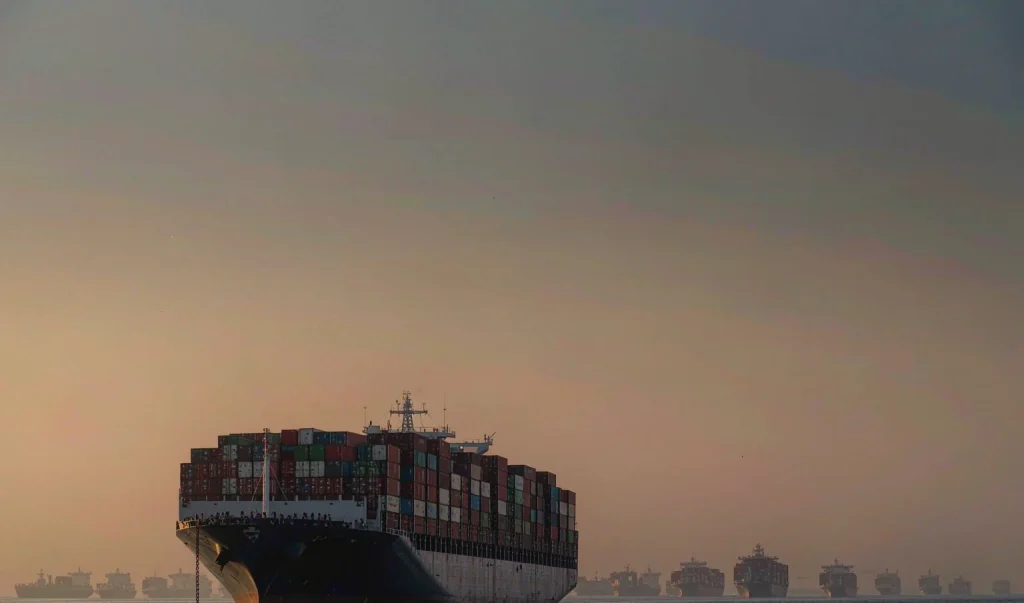
Freight quotes in the fourth quarter of 2026 carry more risk lines than they did in the summer. More services have returned to the Suez Canal, yet schedule reliability has fallen to its lowest level since September 2022, and the Gulf remains the one region where the routing itself – not the rate – is the problem. From mid-October a fresh wave of surcharges lands on African and Indian Ocean gateways. This article is not a forecast: it is a checklist for reading the risk, routing and insurance lines in your next quotation.
What Actually Changed in Early October
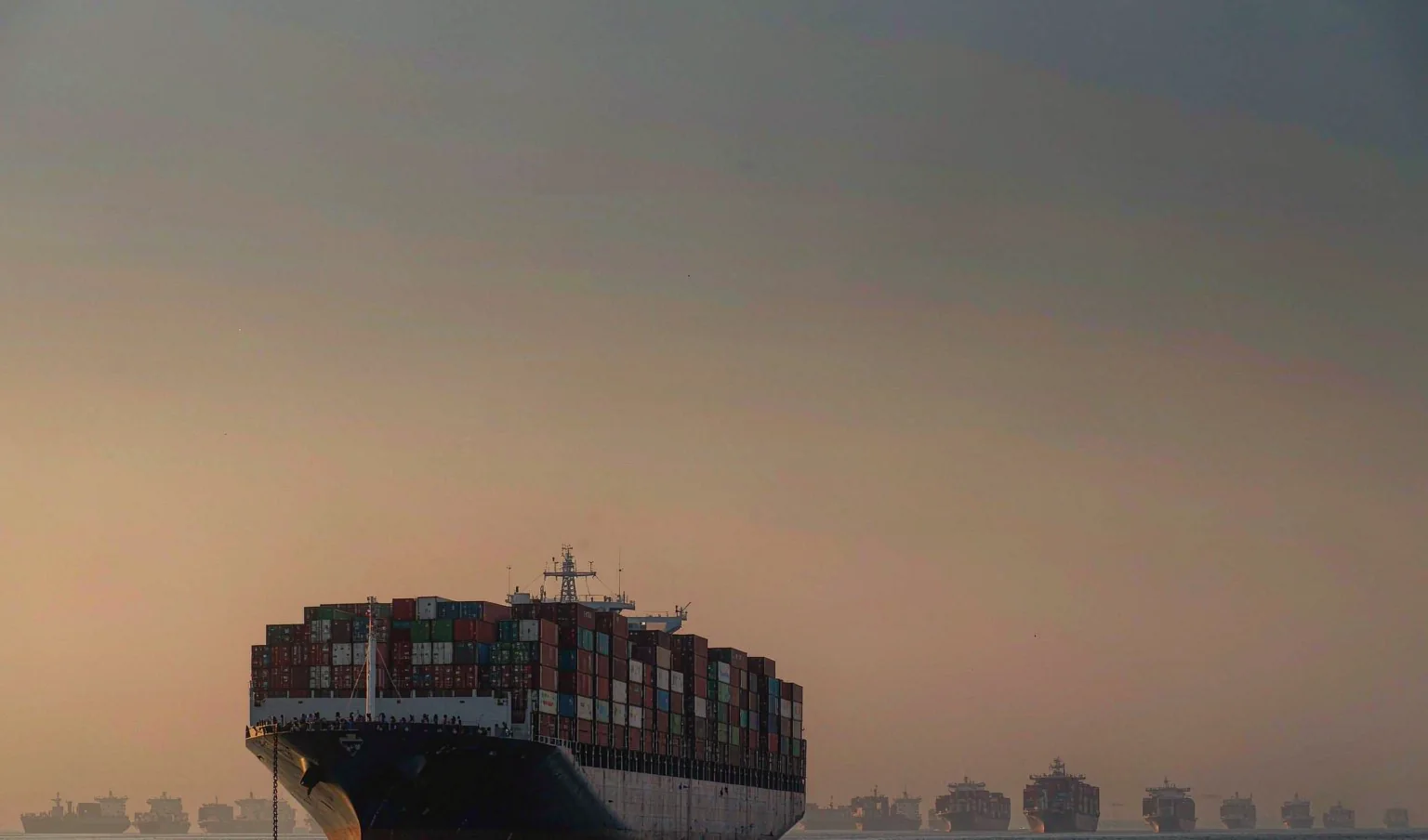
The return to Suez is real but incomplete. Almost all major carriers are now making at least a tentative return on Asia-Europe sailings – the Premier Alliance switched its FE1 service back to Suez from mid-October, and trade reporting counts more than 140 containerships, roughly two million TEU of capacity, shifted back since May. Linerlytica described a recent week as the busiest for Suez containership transits since 2024, and analysts estimate around a third of Asia-Europe sailings now use the Red Sea route. Evergreen remains entirely on the Cape of Good Hope routing.
The catch is that the network is in transition, not in balance. Ships returning via Suez arrive alongside vessels still on the Cape route, Asian ports account for close to two-thirds of global congestion, and reliability at Shanghai and Ningbo is exceptionally low – so the shorter route is not yet delivering its full transit-time benefit. On rates, Asia-Europe spot prices have eased for twelve consecutive weeks – Drewry’s index put Shanghai to Genoa at $3,702 per forty-foot container on 1 October – while carriers have announced second-half increases whose success analysts consider uncertain. Treat the softer numbers as a capacity effect, not a new baseline.
The Gulf: Routing Is the Problem, Not the Price
Transits through the Strait of Hormuz remain far below the pre-crisis baseline, and the risk is not theoretical: UKMTO reported that a vessel transiting the strait was struck by an unidentified projectile on 29 September, the crew extinguishing a fire and continuing without casualties. For cargo owners the exposure shows up as booking restrictions: Maersk has suspended reefer bookings to and from Iraq, Kuwait, Qatar, Bahrain, Saudi Arabia, Jordan and most of the UAE, and applies an emergency freight cost on cargo accepted for local consignees in Jeddah. Volumes that once went direct are re-routed through Salalah, Khor Fakkan, Fujairah and Aqaba, each adding an onward leg.
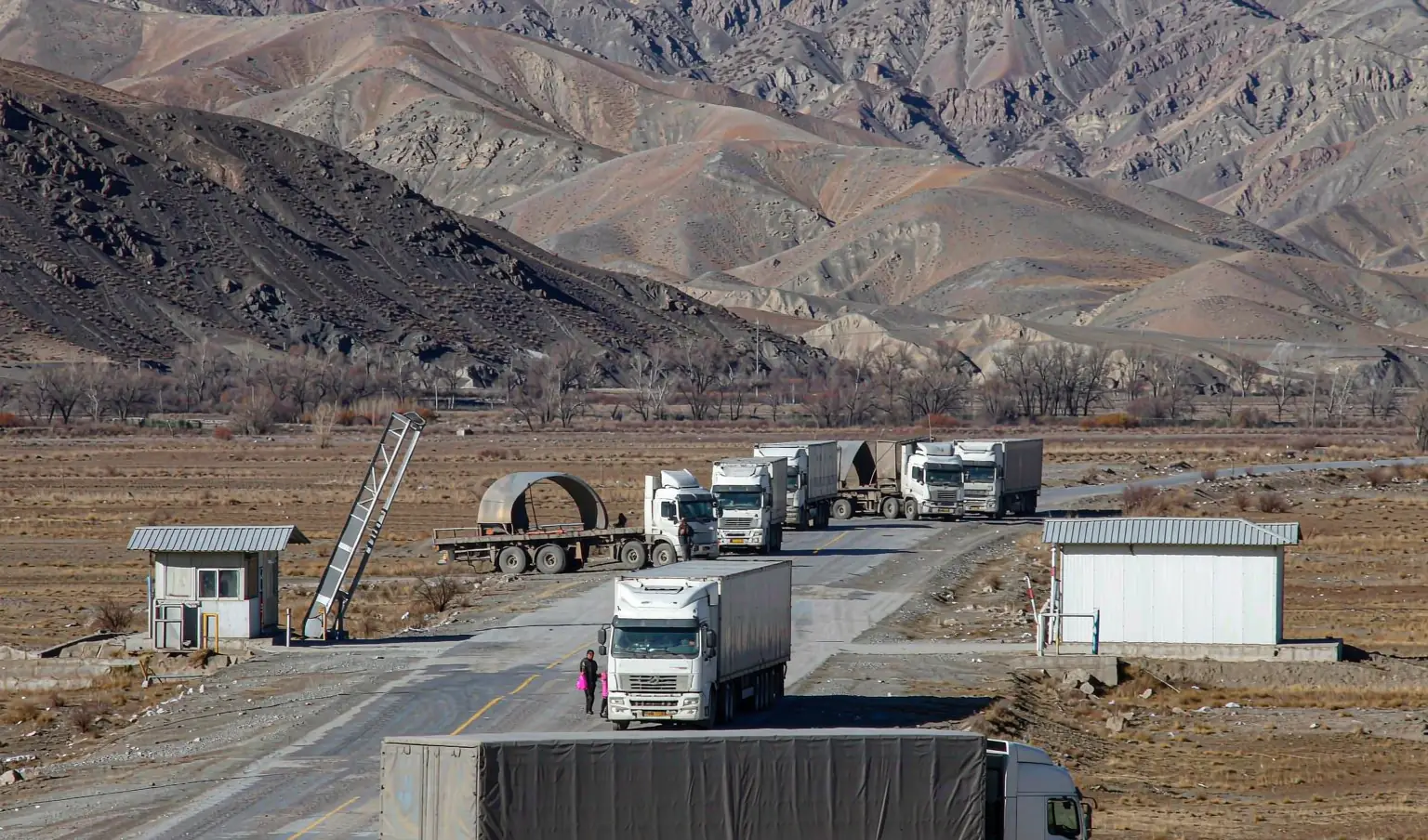
If your cargo is bound for the Gulf or the wider Middle East, the decision sequence is routing first, price second. TIR trucking from China to Iran does not depend on a Hormuz transit, and the China-Central Asia rail corridor keeps running regardless of Red Sea insurance economics – which is why shippers on those lanes treat land transport as the stable fallback rather than the exception.
The Three Layers of War Risk You Are Actually Paying
“War risk” sounds like one thing on an invoice, but it reaches your shipment through three separate doors:
- Hull war risk – the shipowner’s cost. Paid as a percentage of vessel value per transit and passed on through freight pricing. Trade-press readings during the Gulf escalation put Hormuz hull war premiums at several percent of hull value per transit, against roughly a quarter of one percent before the crisis.
- Carrier war-risk surcharges – the flat per-container line. Hapag-Lloyd’s published Gulf surcharge from 2 March 2026 was US$1,500 per TEU, and US$3,500 for reefer and special equipment. A flat surcharge per box means a low-value container pays the same as a high-value one, so on cheap, bulky cargo the risk line can rival the freight itself.
- Cargo war-risk endorsement – your own cover. Written under the Institute War Clauses on the insured value of the goods, case by case. If you buy FOB and arrange your own insurance, this is the layer most often forgotten.
The Seven-Day Clause: How Cover Can Disappear
War cover behaves differently from ordinary marine insurance. The Joint War Committee’s listed areas were redrawn in March 2026 – Bahrain, Djibouti, Kuwait, Oman and Qatar were added on 3 March – and a listing triggers additional premiums and stricter voyage terms. Around the same time, several major P&I clubs issued notices cancelling war cover for Gulf waters effective 5 March, some with a buy-back at new terms.
Under the Institute War Cancellation Clause (Cargo) and its hull equivalent, either party may cancel war cover on seven days’ notice, effective from midnight on the day the notice is issued. Cover that has already attached survives – a shipment under way keeps its insurance, and what the notice ends is the writing of the next shipment. The practical consequence: war cover is availability on a future date, not just a premium level. A routing that was insurable when you booked can be uninsurable by loading time – which is why written routing and a fallback plan belong in the booking.
Surcharge Season in Mid-October Reaches Africa
The October surcharge round is not limited to Europe-bound trades. Carrier filings for 15 October 2026 include Maersk on Far East Asia to South Africa and Mauritius at US$250 per 20ft and US$500 per 40ft, and CMA CGM on China to Dar es Salaam at US$550-600 per TEU and to Mombasa at US$800 per TEU. The Mauritius line matters more than it looks: Mauritius is a common transshipment point for Madagascar and Indian Ocean cargo, so the surcharge propagates into island routings.
The other African story is the receiving end. Port call times at Durban have stayed above seven days for three consecutive weeks – roughly three and a half days of that at anchorage – and industry bodies reported more than ninety-six vessels waiting off the port, Gateway congestion is now where transit time quietly disappears.
How to Read a Quote in Q4 2026
- Ask for surcharges by name and by date. War-risk, emergency bunker, peak-season and congestion lines should each appear separately, marked fixed or floating.
- Insist on a validity date. A quote with no expiry is not a price – and check the adjustment clause, because a base rate increase can apply to bookings already made if the contract allows it.
- Get the routing in writing. On Asia-Europe, Suez versus the Cape is worth roughly eleven days; two offers at the same price can carry very different delivery windows.
- Check the insurance wording. War and strikes cover, geographic exclusions, route-deviation exposure and general average – confirm each against the actual route.
- Re-cost restricted destinations through alternative gateways. For Gulf-bound cargo, price the full door-to-door number via Jeddah, Khor Fakkan or Aqaba including the onward leg.
- Watch the inland budget. Diesel moves drayage and trucking lines even when the ocean rate is flat.
Where CargoSolid Fits
Most of the risk above is a pricing-transparency problem, and that is the part we control:
- Fixed landed DDP pricing. Our quotation includes the surcharge stack and destination charges, so a base rate increase in late October does not silently reopen your price. Contact us for quotation.
- Land and rail alternatives where they win. For Central Asia, Russia, Iran and Iraq, TIR trucking and block-train rail do not cross a Red Sea or Hormuz chokepoint and do not carry a war-risk premium priced on hull value.
- Written routing with a documented fallback. Before you commit, we state the planned routing and the alternative, so a mid-journey change is a decision rather than a surprise.
Practical Actions for the Next Thirty Days
- Book ocean space three to four weeks ahead where carriers are announcing full vessels, and confirm the vessel and voyage in writing.
- Split the portfolio. Urgent replenishment on air or rail, volume on sea – do not let one mode carry the whole quarter.
- Audit open quotes against the checklist above before the mid-October surcharge round takes effect.
- For Gulf and Middle East destinations, price the land route in parallel even if you ship by sea.
How to Get a Quote
CargoSolid arranges DDP shipping from China by sea, air, rail and TIR trucking, with fixed landed pricing that absorbs the surcharge noise. For a quotation on your lane, contact cargosolid@outlook.com or WhatsApp +86 186 7539 5280.
Frequently Asked Questions
Is the Red Sea safe for container shipping now?
Partially. Around a third of Asia-Europe sailings have returned to the Suez route and more are joining, but some lines remain on the Cape route and future routings depend on continued stability. Confirm your booked service’s routing in writing.
What is a war-risk surcharge and who pays it?
A carrier charge that recovers the hull war-risk premium for transiting high-risk waters, billed as a flat amount per container. It reaches the cargo owner through the freight quote; under DDP it sits inside our fixed landed price.
Why does war-risk cover matter if I do not own the ship?
It reaches you three ways: the carrier’s freight pricing, flat per-container surcharges, and your own cargo policy, which needs a war-risk endorsement under the Institute War Clauses. If you buy FOB and insure yourself, that endorsement is the layer most often missed.
What is the seven-day cancellation clause?
War-risk cover can be cancelled by either party on seven days’ notice. Cover already attached to a shipment under way survives, but new bookings after a notice may be uninsurable or repriced – so confirm routing and insurance in writing before you commit.
Do the new October surcharges affect Madagascar and East Africa?
Yes, indirectly. Surcharges effective 15 October 2026 cover South Africa, Mauritius, Dar es Salaam and Mombasa – and Mauritius is a common transshipment point for Indian Ocean and Madagascar cargo, so the cost propagates into those routings.
When is land transport the better option in Q4 2026?
When the destination is Central Asia, Russia, Iran or Iraq: TIR trucking and block-train rail do not cross the Red Sea or Hormuz chokepoints, avoid war-risk premiums, and currently offer the most predictable transit on those lanes.
Related Materials
- Suez Returns, Golden Week Blanks: A Q4 2026 Shipping Outlook
- Hormuz Closure and Freight: Why TIR Trucking Stays Stable
- First China-Iran Block Train via Central Asia: What It Means for Shippers
- eTIR Goes Paperless Across the Caspian
- Container Freight Rates: A Guide for China Shippers | Land & Rail Freight
- FAQ | Contact Us
Get in Touch
Tell us what you are shipping and where it is headed. Our team usually replies within one business day with a tailored quote.