








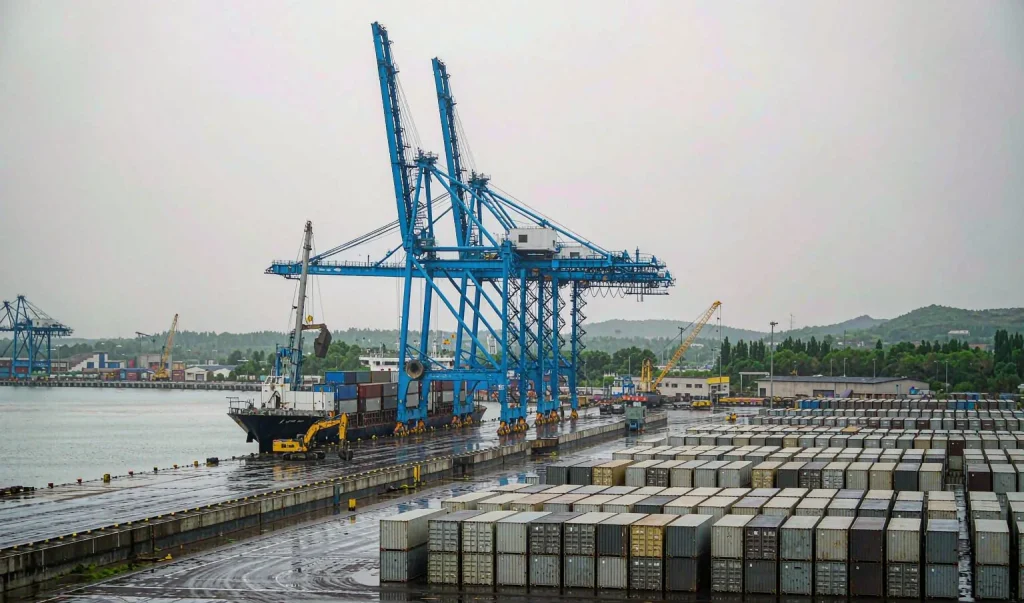
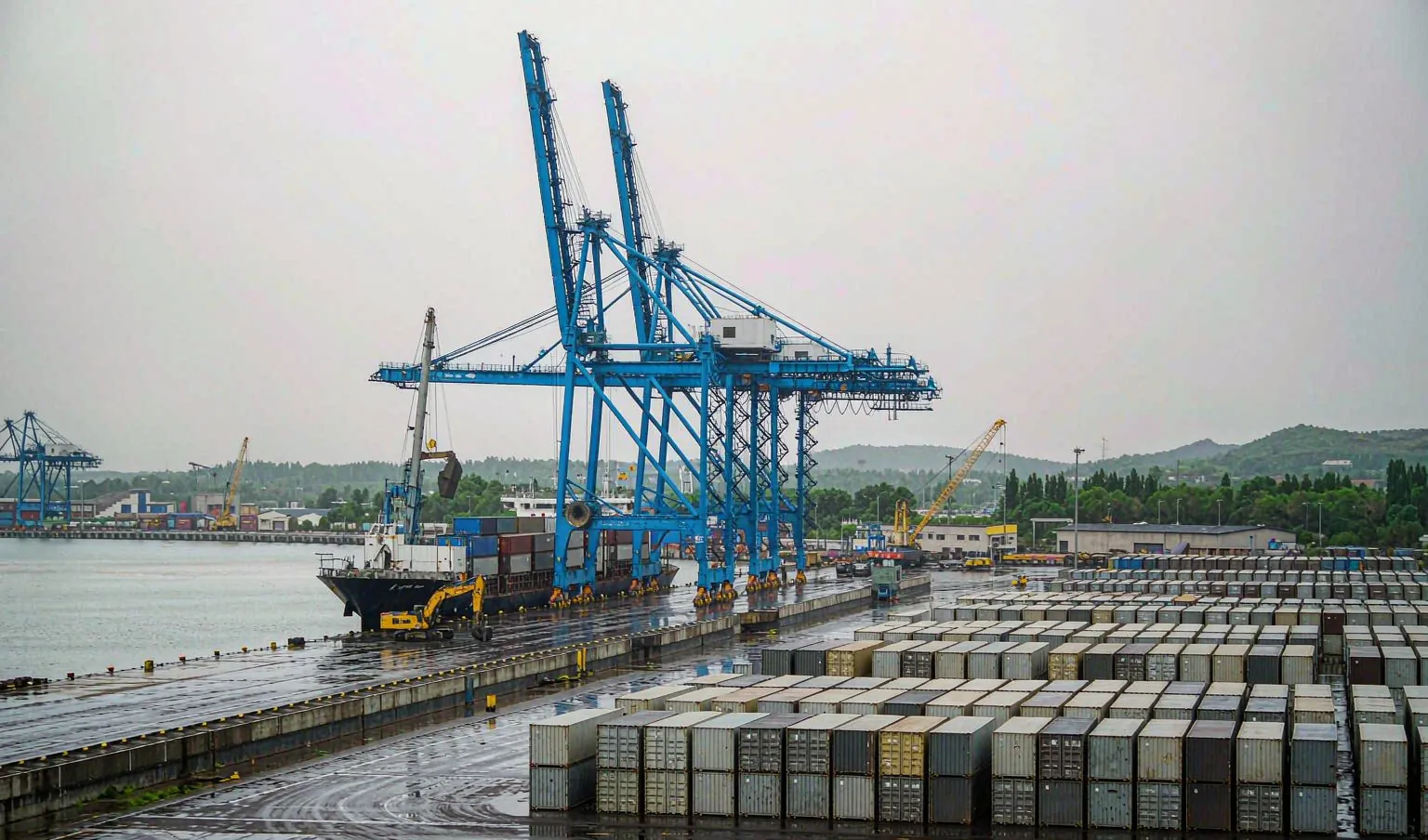
Georgia is the shortest answer to a hard question: how do you reach the South Caucasus without waiting weeks for a northern transit or a slow transshipment? Poti, on the Black Sea coast, is the country’s main container gateway – it handles roughly 80 percent of Georgia’s containerised traffic and doubles as the sea entry for cargo bound for landlocked Armenia and for parts of Azerbaijan. Add a free trade agreement with China that removes duty on most product lines, a single 18 percent import VAT, and a growing role in the Trans-Caspian Middle Corridor, and Georgia becomes both a destination market and a transit hub worth planning around.
Why Georgia Matters as a Gateway
One country, three logistics roles:
- A destination market. Tbilisi, Rustavi, Kutaisi and Batumi absorb consumer goods, construction materials, machinery and electronics from China, moved by importers and wholesalers serving the domestic market and its re-export flows.
- The sea door to Armenia. Armenia is a Eurasian Economic Union member with no coastline of its own. Ocean cargo for Yerevan lands at Poti or Batumi and moves overland under bonded transit, with EAEU clearance completed in Armenia.
- A Middle Corridor node. The Baku-Tbilisi railway and Georgia’s Black Sea ports anchor the western end of the Trans-Caspian route. As Kazakhstan and Azerbaijan digitise the corridor, transit volumes through Georgia keep growing.
The practical meaning for a shipper: a Georgia booking is rarely just about Georgia. Decide early whether the destination is a Georgian warehouse, a cross-dock for Armenia or Azerbaijan, or a rail-onward move toward Turkey – because the best entry port and the document set differ for each.
Four Ways to Move Cargo from China to Georgia
1. Ocean freight to Poti and Batumi
Container services from Chinese ports such as Shanghai, Ningbo, Yantian and Nansha reach the Black Sea through the Suez Canal and the Bosphorus, normally with one transshipment call. As a planning range, expect around four to six weeks port to port including the connection, and five to seven weeks door to door with clearance and inland delivery. Poti is the default for containers – APM Terminals operates the main container terminal – while Batumi leans more toward bulk, liquid and ro-ro cargo.
2. Rail via the Middle Corridor
Containers leave China by rail through Kazakhstan, cross the Caspian from Aktau or Kuryk to Azerbaijan, and continue on the Baku-Tbilisi railway into Georgia. Kazakhstan’s government said on 5 October 2026 that Trans-Caspian corridor transit has fallen from 38 days to 13-17 days, with a stated target of 10-12 days to Georgian and Turkish ports. The Caspian ferry leg is still the reliability wildcard – early-October 2026 border monitoring reported loading cycles of more than 30 days at Aktau during the congestion peak – so quotes on this routing deserve buffer days rather than blind trust.
3. TIR trucking
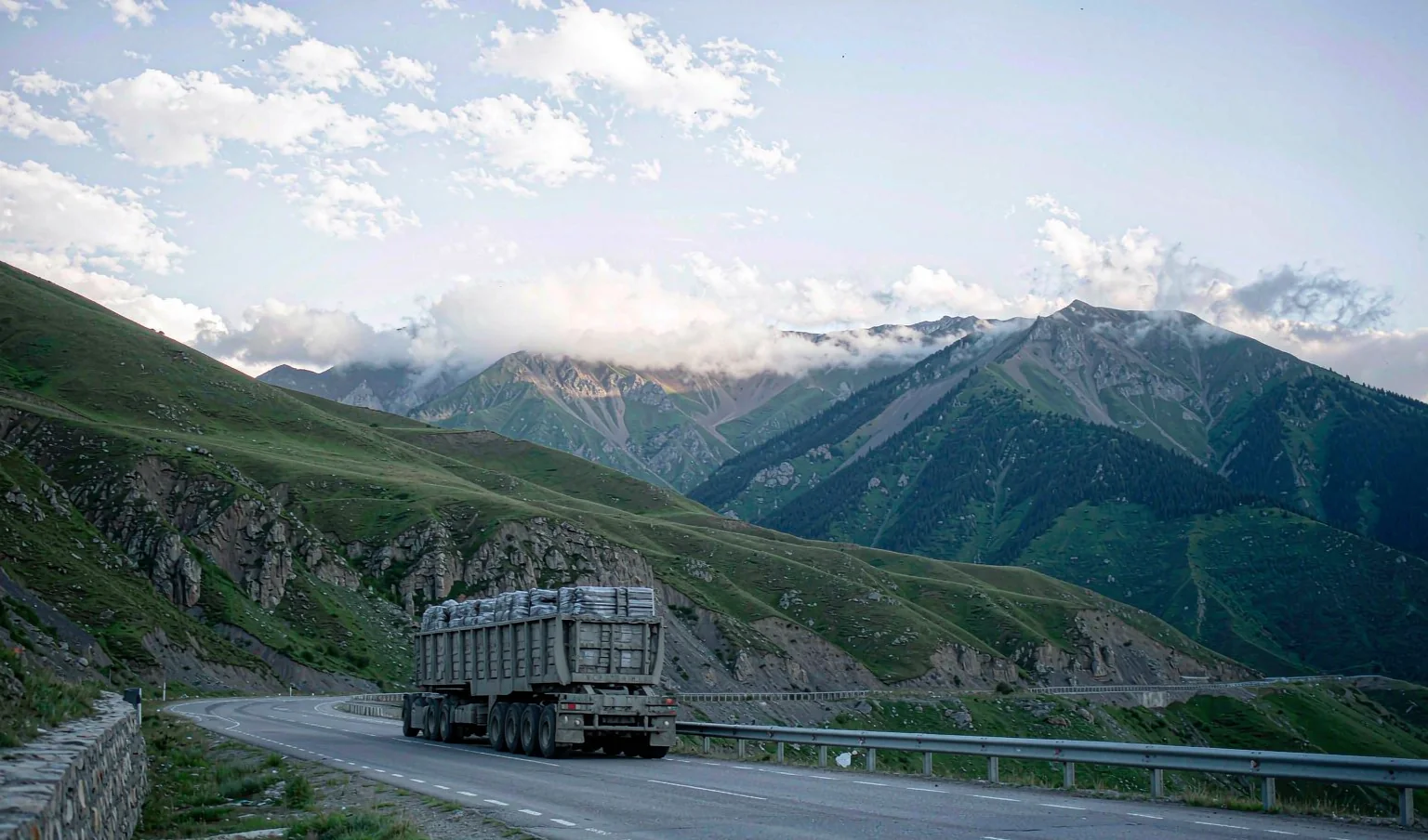
Full truckloads collect at the Chinese factory and drive west through Central Asia, crossing the Caspian by ferry between Aktau and Baku (or routing via Iran and Turkey, depending on cargo type and season), before clearing into Georgia. Typical door-to-door transit is two and a half to three and a half weeks. The eTIR digital transition across the Caspian corridor has been stripping paper handling out of exactly this route, which is why trucking has become the go-to option for time-sensitive cargo on Central Asia and Caucasus lanes.
4. Air freight to Tbilisi
Tbilisi International Airport handles the country’s air cargo. Door-to-door transit from China, including clearance and delivery, typically completes in about one week – the right answer for samples, urgent spares and high-value electronics.
| Mode | Typical door-to-door transit | Best for |
|---|---|---|
| Ocean to Poti | Roughly 5-7 weeks including clearance and delivery | Cost-sensitive volume, project cargo |
| Middle Corridor rail | Roughly 3-4.5 weeks | Balanced cost and speed for Caucasus and Central Asia |
| TIR trucking | Roughly 2.5-3.5 weeks | Time-critical cargo, true door delivery |
| Air freight to Tbilisi | Roughly 1 week including clearance | Urgent, high-value or sample shipments |
Transit varies with the Caspian crossing and the sailing connection – confirm the current schedule before fixing sales commitments.
Georgia Customs: Duty, VAT and the China-Georgia FTA
Georgia runs one of the simplest tariff schedules you will meet anywhere:
- Only three duty rates: 0, 5 and 12 percent. Around 90 percent of tariff lines are duty-free, and most industrial goods enter at zero.
- The China-Georgia Free Trade Agreement. In force since 2018, it removes duty on the large majority of Chinese-origin lines when the shipment carries a certificate of origin that meets the agreement’s rules of origin. Without the certificate you fall back to the standard rate – so ask your supplier to arrange the origin document before the container leaves the factory.
- Import VAT at 18 percent. Charged on the customs value plus any duty. VAT-registered Georgian businesses can normally reclaim it; end consumers cannot.
- Modest declaration fees. Roughly US$5.60 for consignments valued under about US$1,111 and US$67 above that, per the US International Trade Administration’s Georgia country guide (accessed September 2026).
- No financial guarantee as a rule. Georgia’s customs code does not require a prior financial guarantee for standard imports; the exception is temporary admission.
Two compliance details catch importers off guard. First, labelling: consumer products – cosmetics, pharmaceuticals, chemicals, processed food and everyday consumer goods – must carry Georgian-language labelling at the point of sale, and alcohol and tobacco need excise stamps. Second, technical regulation: Georgia is aligning its standards with the EU, and products that cleared easily a few years ago can now require additional conformity evidence. Verify the specific HS code with your broker before production, not after arrival.
DDP or DDU to Georgia: Which Terms Fit?
Both models work, and the right choice depends on who stands at the border as importer of record:
- DDP (Delivered Duty Paid). CargoSolid arranges export clearance in China, the main carriage, import clearance, duty and VAT payment, and final delivery – using our Georgian partner network as importer of record where the buyer has no local entity. The consignee receives the goods with no additional charges at the door, and the landed cost is fixed at booking. This suits sellers without a Georgian registration and buyers who want one number to plan against.
- DDU/DAP (buyer as importer). The consignee registers the import under its own tax ID and clears through its own broker. For a VAT-registered Georgian company this is often cheaper overall, because the 18 percent import VAT becomes recoverable input tax instead of a cost buried inside a DDP price.
Tell your forwarder which situation you are in before requesting quotes – it changes both the paperwork and the effective price. For the trade-offs in general, see our DDP shipping guide.
The Document Checklist
- Commercial invoice – itemised, valued in a stable currency, with consignee details matching the tax registration exactly.
- Packing list – piece counts, weights and dimensions per package, consistent with the invoice.
- Transport document – bill of lading for sea, CMR for truck, air waybill for air.
- Certificate of origin (China-Georgia FTA format) – the document that unlocks zero duty under the agreement.
- Customs declaration – filed in Georgia’s ASYCUDA system by your broker, or by us under DDP.
- Permits for regulated goods – food, pharmaceuticals, chemicals and telecoms equipment each carry their own approval path.
Practical Tips for This Lane
- Book rail and truck space two to three weeks ahead. Corridor capacity is improving, but the Caspian leg still bunches demand.
- Fix the HS code early. It decides whether the FTA zero rate applies and which permits attach.
- Get the FTA certificate of origin right the first time. A retroactive correction costs more time than preparing the document properly.
- Insure the Caspian leg. Ferry crossings carry weather and congestion risk; all-risk cover is inexpensive relative to the exposure.
- Plan Armenia and Azerbaijan moves as bonded transit from day one. Transit documents must be consistent with the final destination from the start.
How to Get a Quote
CargoSolid arranges door-to-door shipping from China to Georgia by sea, Middle Corridor rail, TIR trucking and air, including Poti and Batumi handling, customs clearance and delivery across Tbilisi, Rustavi, Kutaisi and Batumi, with bonded onward transit to Yerevan and Baku. For a fixed quotation, contact cargosolid@outlook.com or WhatsApp +86 186 7539 5280.
Frequently Asked Questions
How long does shipping from China to Georgia take?
Ocean to Poti runs roughly five to seven weeks door to door including the transshipment and clearance. Middle Corridor rail takes about three to four and a half weeks, TIR trucking two and a half to three and a half weeks, and air about one week. The Caspian crossing varies, so confirm at booking.
Do Chinese goods pay import duty in Georgia?
Georgia has only three duty rates – 0, 5 and 12 percent – and about 90 percent of tariff lines are duty-free. Under the China-Georgia Free Trade Agreement, most Chinese-origin goods enter at zero duty when a valid certificate of origin is provided.
What is import VAT in Georgia?
Eighteen percent, charged on the customs value plus duty. VAT-registered importers can normally reclaim it, which is why some buyers prefer DDU terms over DDP.
Can I ship to Armenia or Azerbaijan through Georgia?
Yes. Poti and Tbilisi are the standard gateways for the South Caucasus. Cargo moves onward by truck under bonded transit, with EAEU clearance for Armenia completed in Yerevan.
Is DDP available for Georgia?
Yes. CargoSolid can act through its Georgian partner network as importer of record, covering clearance, duty, VAT and final delivery for a fixed landed price. Contact us for a quotation.
Which documents are required to import into Georgia?
A commercial invoice, packing list, transport document and customs declaration, plus a China-Georgia FTA certificate of origin to claim zero duty. Regulated goods such as food, pharmaceuticals and chemicals need permits, and consumer products need Georgian-language labelling.
Related Materials
- China-Europe Rail October 2026: Border Queues and Faster Corridors
- Shipping from China to Armenia | Shipping from China to Azerbaijan
- China to Azerbaijan Shipping 2026: Middle Corridor & DDP
- Middle Corridor Update: BTK at Full Capacity, EUR 2B EU Funding
- DDP Shipping from China: When It Pays Off
- Customs Clearance | Land & Rail Freight | FAQ | Contact Us
Get in Touch
Tell us what you are shipping and where it is headed. Our team usually replies within one business day with a tailored quote.